
Photo by McMichael Mutok Jr.
Kaigun Sho, Airai State
Japanese Communication Center
- Airai State
Site Type
Date Registered
Site No
History
In recognition of its significance, Kaigun Sho, Japanese Communication Center site number B:IR-1:8 has been listed in the Palau Register of Historic Places on May 23, 2006. Through preservation, study, and interpretation, the site can serve to educate future generations concerning the historical and cultural heritage of the Palauan community and the state of Airai.
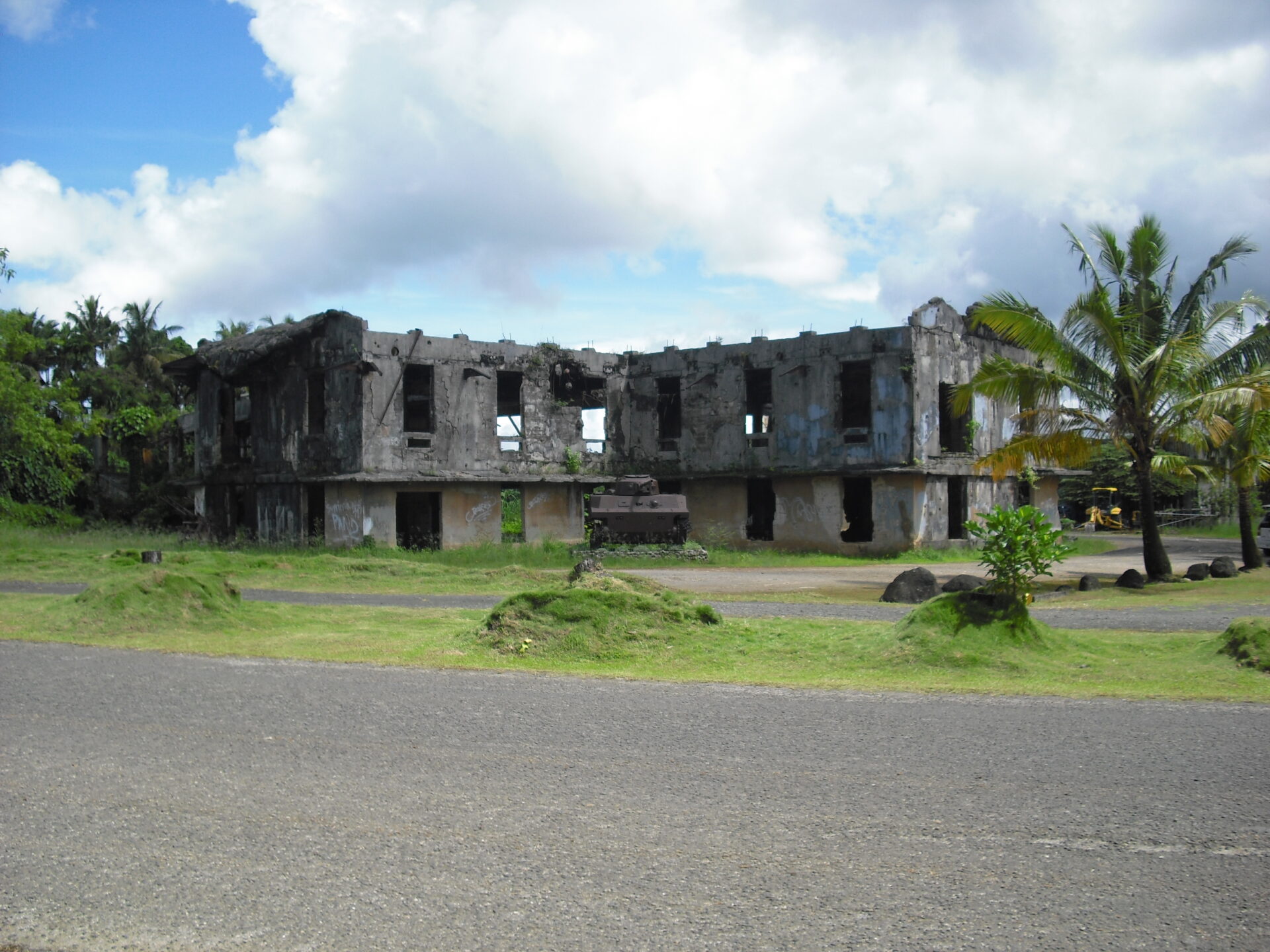
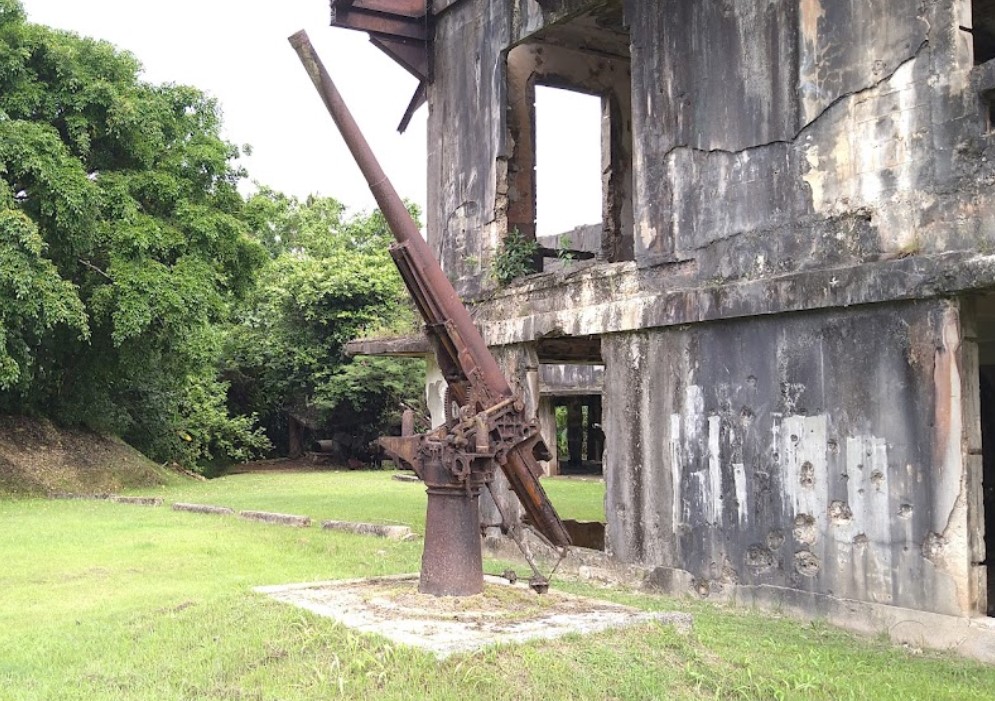
The site contains several historic features that were part of the Japanese communication center that occupies a flat area at the road junction to Ked and Kesebelau areas and near the Airai State Community Center. The site contains two ruins of historic buildings, a concrete cistern and several defense guns. The guns were brought to the area from elsewhere. The largest building is located closer to the road and is mostly intact, providing a good example of Japanese structures during its administration in Palau. The west side of the building still has a partly collapsed roof that was bombed during WWII. The building behind it is being used by the Airai State Public Works. The walls are original, but the roof has been replaced. The interior has been renovated to accommodate an office.
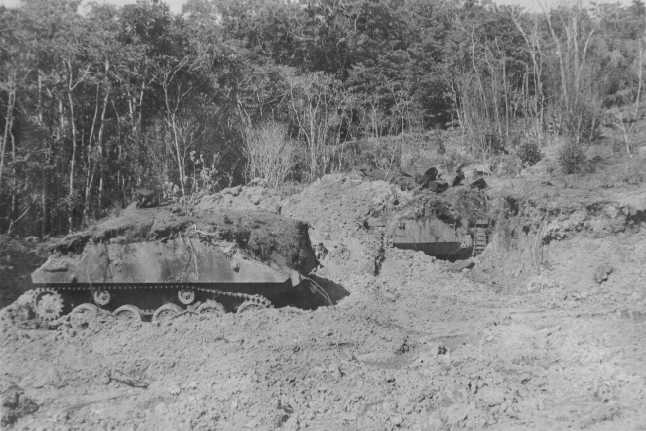
Japanese Tanks uncovered on the hills of Airai. Photograph from the Trust Territory of the Pacific Archive
According to elders in Airai, the site was used by the Japanese as a Power Plant during World War II. The site contained of two ruin historic buildings, across the building on the left were the Community Center is located, was a big concrete water tank used by the Japanese army to cool off the power engine when overheat. Across the main road there was a radio tower located there all the way to the Koksai building close to the Airai Elementary School but was removed after the war in 1950.
After World War II ended on the year 1945, the building was occupied and used as a school. In 1960’s, a movie production came to Palau and made a film here called “Hell in the Pacific” starred by Lee Marvin and Mifune. Kaigun Sho had a part in this movie.
Toward the middle of 1960’s, the place was cleared and occupied as a barracks by the people who work to construct the International Airport.
All the guns and tanks were brought from the jungle within the Airai boundary and was placed there beside the Kaigun Sho building for tourist attraction. There are 5-gun emplacements and 2 war tanks.
The two buildings were built before the war begun. Purpose was used as a Power Plant for the Japanese Army. According to the source the building designer was very smart that he designed the roof like a cross so when the enemy passed through by plane, they assume it is a hospital. Today the bullets and bombs markings on the buildings are in plain sight and today it remains standing.
Compiled by McMichael Mutok Jr.
Palau National Register of Historic Places
Bureau of Cultural and Historical Preservation
Sign up to receive the BCHP monthly newsletter.
Kaigun Sho 海軍省 (Japanese Communication Center)
遺構の歴史
この遺跡は、ケド地区およびケセベラウ地区への道路の分岐点にある平坦な土地に位置し、アイライ州コミュニティセンターの近くに設置されていた日本の通信センターの一部でした。敷地内には、歴史的建造物の遺構が2棟、コンクリート製の貯水槽、そして複数の防御用砲台が残されています。これらの砲は他の場所からこの地域へ運ばれてきたものです。
最も大きな建物は道路に近い場所に位置し、現在でも保存状態がよく、パラオ統治時代の日本の建築様式をよく示す好例となっています。建物の西側部分には、第二次世界大戦中の爆撃により一部が崩落した屋根が現在も残っています。その背後にある建物は現在、アイライ州公共事業局によって使用されており、壁は当時のままですが、屋根は新しく取り替えられ、内部は事務所として使用できるように改修されています。
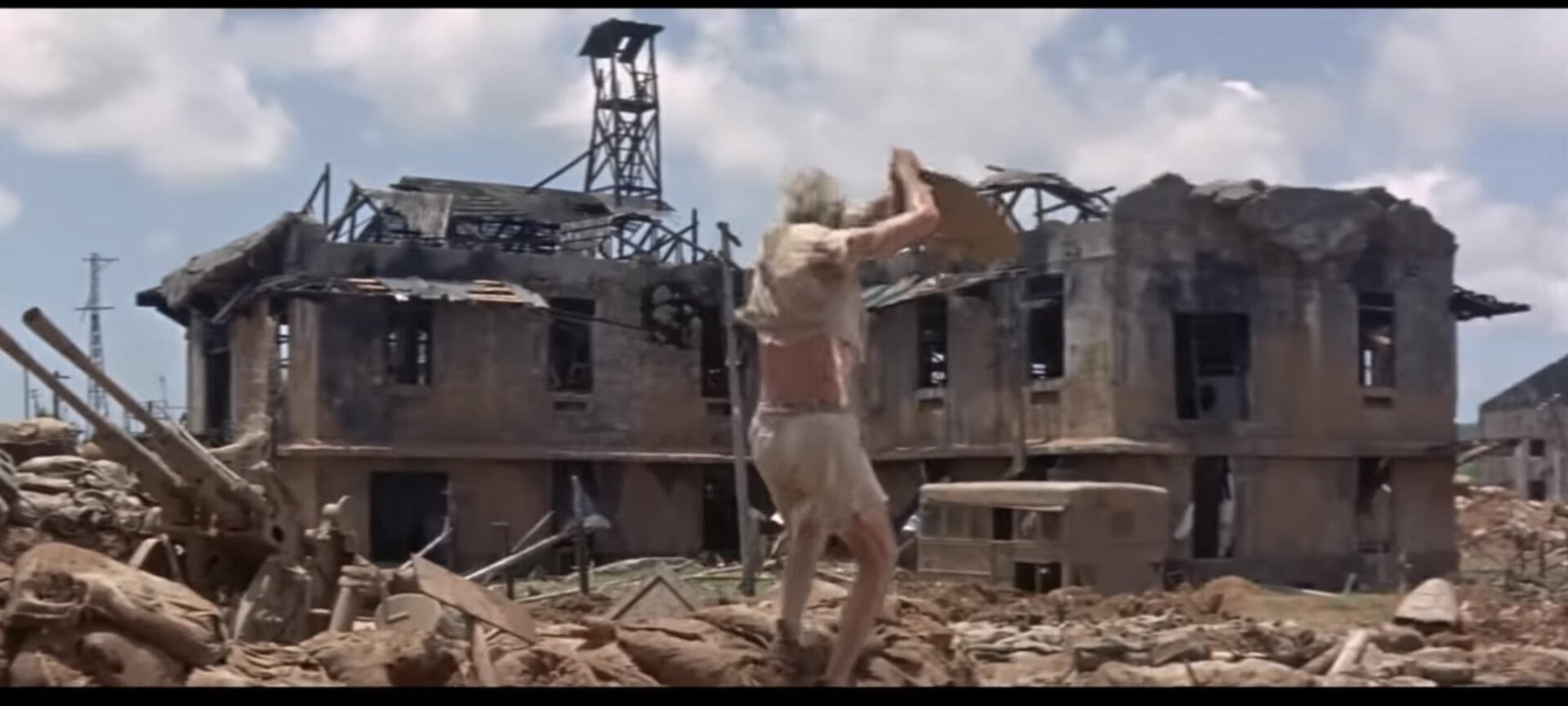
Movie (1968) Hell in the Pacific
海軍省 ・ コクサイについて
アイライ州の長老の話によると、この場所は第二次世界大戦中に日本軍によって発電所として使用されていました。敷地内には歴史的建造物の遺構が2棟あり、左側の建物の向かい、現在コミュニティセンターが建っている場所には、日本軍がエンジンの過熱時に冷却するために使用していた大きなコンクリート製の貯水槽がありました。また、幹線道路の向かい側には無線塔があり、アイライ小学校近くのコクサイビルまで伸びていましたが、戦後の1950年に撤去されました。
第二次世界大戦が1945年に終結した後、この建物は占拠され、学校として使用されました。1960年代には映画制作チームがパラオを訪れ、ここで主演リー・マーヴィンと三船敏郎の「地獄の戦線(Hell in the Pacific)」という映画が撮影されました。海軍省もこの映画に関わっていました。
1960年代半ば頃、この場所は撤去され、国際空港建設に携わる人々によって兵舎として使用されました。
2006年5月23日までに、パラオ歴史遺産保存局はこの場所をパラオの歴史遺産として登録しました。
すべての砲や軍用戦車は、アイライ州区域内のジャングルから運び出され、観光名所とするために海軍省の建物の横に設置されました。そこには5基の砲座と2両の戦車があります。
その2棟の建物は戦争が始まる前に、日本軍の発電所として使用するために建設されました。資料によると、設計者は非常に聡明で、敵機が上空を通過した際に病院だと誤認させるよう、屋根を十字形に設計したといわれています。現在でも建物には弾痕や爆撃の跡がはっきりと残っており、今日までその姿をとどめています。
もう一つの日本時代の遺構は、アイライ小学校の隣にも位置しており、この建物は通信センターとして建設され、使用されていました。建物の下にはトンネルが造られており、機材や物資を保管する倉庫として利用されていました。
Compiled by McMichael Mutok Jr.
Palau National Register of Historic Places
Bureau of Cultural and Historical Preservation
Sign up to receive the BCHP monthly newsletter.
CODE OF CONDUCT
Given the importance of this site to Palauans in terms of their history and culture and the concerns that exist in regard to its future, those visiting the site should not engage in any type of behavior or activity that disturbs the integrity of this site or diminishes the respect that should be accorded to it.
PALAU HISTORIC PRESERVATION GUIDELINES
Because of the importance and sensitivity surrounding this and all historical registered sites, the Palau Historic Preservation Office would like to emphasize proper conduct for visiting a site through the following guidelines.
1) Remember that many sites include culturally sensitive areas and therefore behavior should be always be respectful.
2) Remember to take everything you bring to the site with you when you leave.
3) Do not remove anything from the site. Although you may not think something is significant to the site, all pieces make up the whole.
Location of Kaigun Sho, Japanese Communication Center, Airai State
Compiled by McMichael Mutok Jr.
Palau National Register of Historic Places
Bureau of Cultural and Historical Preservation