
Photo by McMichael Mutok Jr.
(2026)
Type 2 Ka-Mi Amphibious Tank
Historic Remains WWII
- Koror State
Site Type
Site No
History
In recognition of its significance, Type 2 Ka-Mi Amphibious Tank and Japanese Bunker site number B:OR-9:16 is a World War II Historic Remains eligible in the Palau Register of Historic Places. Through preservation, study, and interpretation, the site can serve to educate future generations concerning the historical and cultural heritage of the Palauan community and the state of Koror.
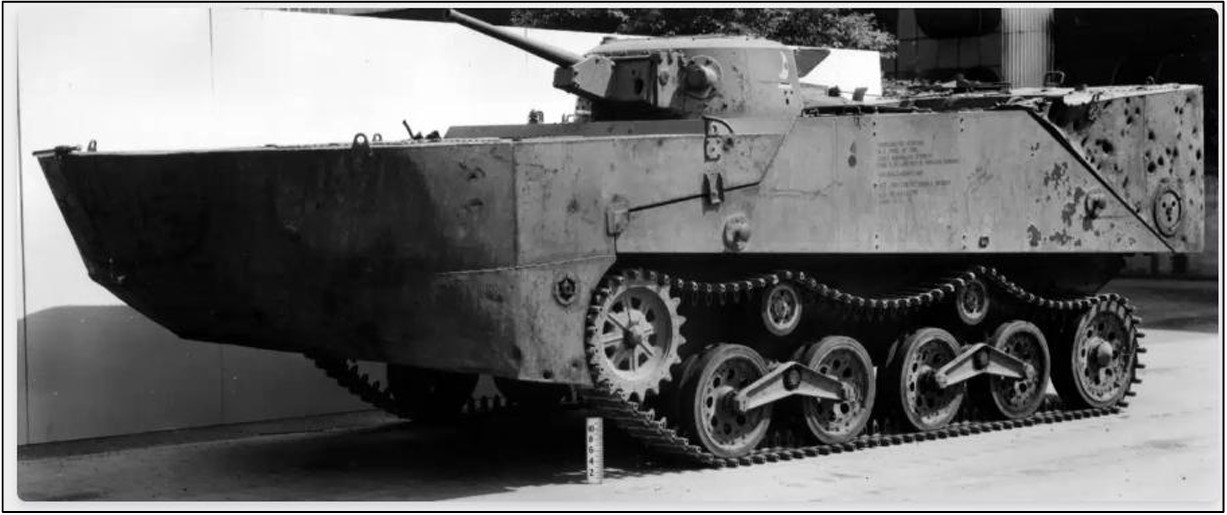
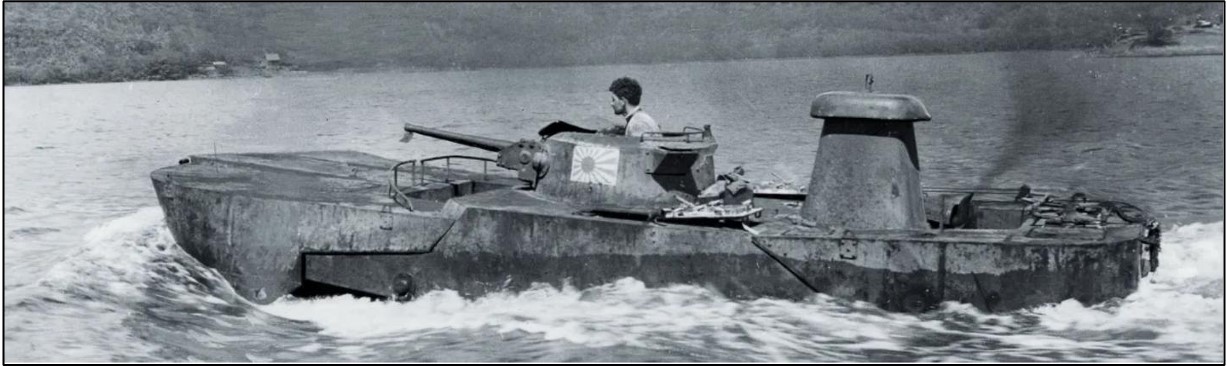
The Type 2 Ka-Mi was an amphibious light tank developed for the Imperial Japanese Navy during World War II. Designed to support naval landing forces, the tank was capable of traveling through water and then transitioning directly onto land to assist infantry during amphibious operations.
Development began in 1941 when Mitsubishi was tasked with modifying an existing Japanese light tank for amphibious use. Engineers based the design on the suspension of the Type 95 Ha-Go light tank but introduced a new welded hull sealed with rubber gaskets to prevent water from entering. To provide flotation and stability in water, the tank was equipped with two large detachable pontoons mounted at the bow and stern. Once the vehicle reached shore, the crew could release the pontoons, allowing the tank to operate as a conventional light tank on land.
(Nara Archives)
The vehicle displayed here retains its stern pontoon, while the bow pontoon is missing. The pontoons were often removed or lost after the war, and surviving examples are rarely complete.
Mounted on this vehicle is a 25mm anti-aircraft gun that was not part of the original tank design. This weapon is a Type 96 25 mm automatic cannon, widely used by the Imperial Japanese Navy during World War II as an anti-aircraft defense system. It was typically installed in fixed naval or land-based mounts with single, twin, or triple gun arrangements. The gun was likely placed on the tank after the war and does not represent the tank’s original armament.
Approximately 180 Type 2 Ka-Mi tanks were produced between 1943 and 1945. Although technologically advanced for its time, the tank saw limited success in combat due to the changing conditions of the Pacific War, where Japanese forces were often defending islands rather than conducting amphibious assaults.
Today, the Type 2 Ka-Mi stands as a rare example of specialized amphibious armored vehicle design developed during World War II for island warfare in the Pacific.
(National Archive)
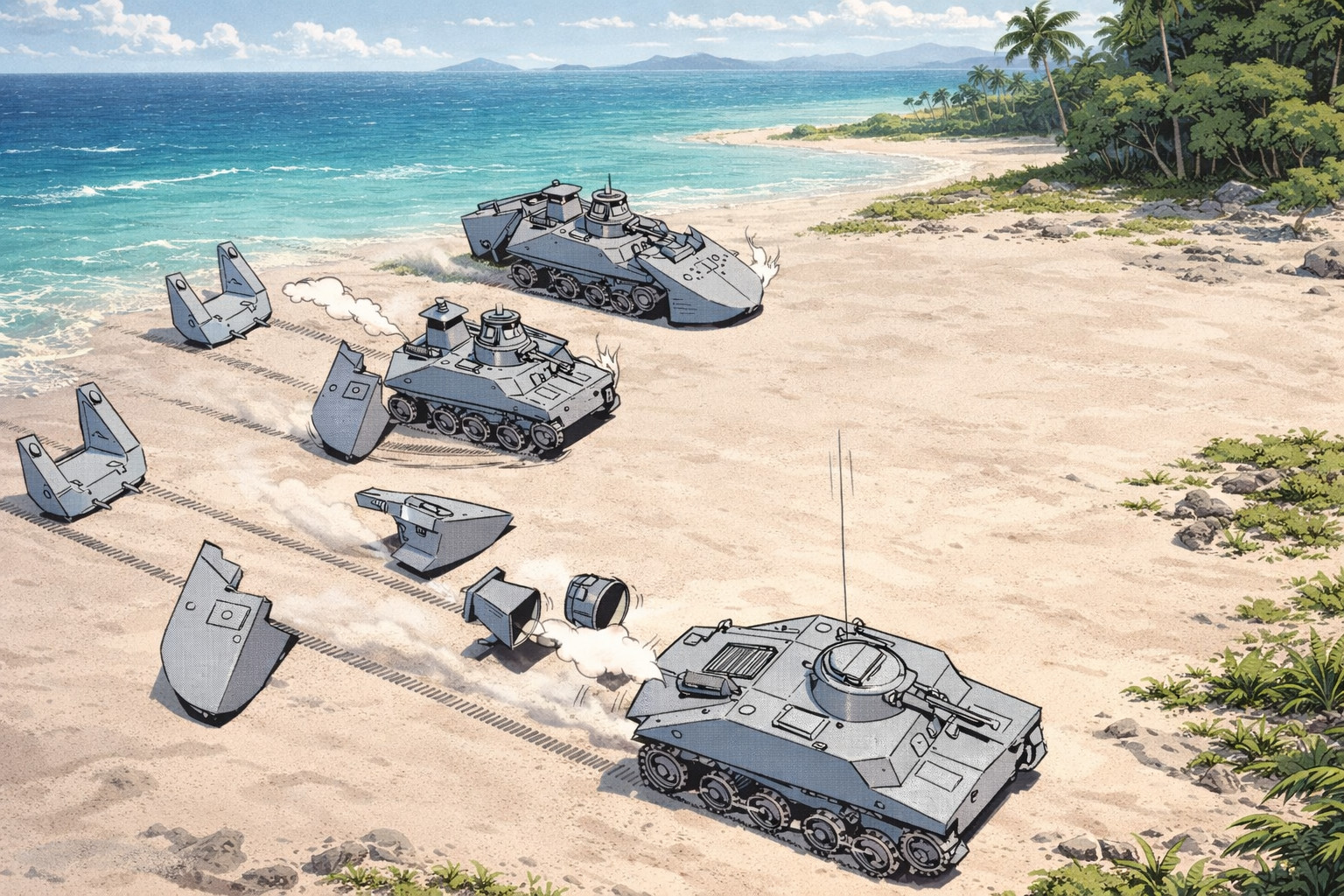
(Process of Pontoon removal during littoral assault)
Compiled by McMichael Mutok Jr.
Palau National Register of Historic Places
Bureau of Cultural and Historical Preservation
Sign up to receive the BCHP monthly newsletter.
CODE OF CONDUCT
Given the importance of this site to Palauans in terms of their history and culture and the concerns that exist in regard to its future, those visiting the site should not engage in any type of behavior or activity that disturbs the integrity of this site or diminishes the respect that should be accorded to it.
PALAU HISTORIC PRESERVATION GUIDELINES
Because of the importance and sensitivity surrounding this and all historical registered sites, the Palau Historic Preservation Office would like to emphasize proper conduct for visiting a site through the following guidelines.
1) Remember that many sites include culturally sensitive areas and therefore behavior should be always be respectful.
2) Remember to take everything you bring to the site with you when you leave.
3) Do not remove anything from the site. Although you may not think something is significant to the site, all pieces make up the whole.
Location of Type 2 Ka-Mi Amphibious Tank and Japanese Bunker,
Koror State
Compiled by McMichael Mutok Jr.
Palau National Register of Historic Places
Bureau of Cultural and Historical Preservation